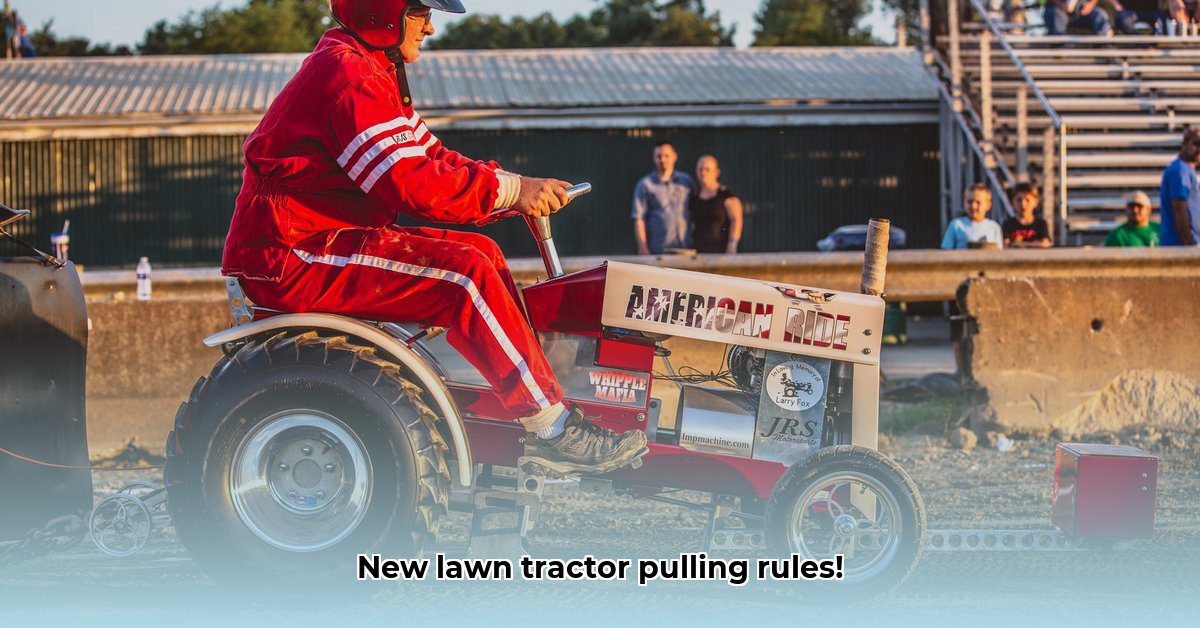
The National Garden Tractor Pulling Society (NGTPS) has announced significant rule changes for the 2024-2025 season, impacting carburetor specifications, engine placement, weight classes, and starting procedures. These changes represent a substantial shift in the competitive landscape, demanding adaptation and strategic planning from all competitors. This guide breaks down the key alterations, providing clarity for both seasoned pullers and newcomers. For complete rule details, check the official rules.
Revamped Carburetor Specifications: A Focus on Stock Appearance
The NGTPS has tightened regulations on carburetor modifications, particularly in the Pro Stock Carb class. This signifies a move towards a more standardized approach to engine configuration. The days of loosely interpreted "stock" carburetors are over.
Stricter Tolerances: The 2024-2025 rules introduce significantly tighter tolerances for all carburetor modifications. Any deviation from the specified dimensions and configurations will result in disqualification. This necessitates meticulous attention to detail during engine preparation.
Emphasis on Stock Appearance: While performance tuning is still permitted, the emphasis is now on maintaining a stock appearance. This shift requires a deeper understanding of carburetor functionality and the ability to achieve optimal performance within the confines of stricter regulations.
Impact on Competitors: Racers will need to carefully review their existing carburetor setups, ensuring complete compliance with the new specifications. A thorough inspection of carburetor dimensions, airflow adjustments, and fuel delivery systems is crucial, and may require significant re-engineering in some cases.
Engine Placement: Clarification of the "Hinkle Rule"
The "Hinkle Rule," which governs engine placement within the tractor frame, remains in effect, but with added clarity. While complete specifics are still pending official NGTPS release, early indications suggest restrictions on engine positioning flexibility.
Ongoing Clarification: The NGTPS is expected to release further details and interpretations of the "Hinkle Rule," offering precise guidelines on permissible engine placement.
Potential Limitations: The updated clarification might effectively limit some previously popular engine positioning modifications. This requires racers to anticipate potential adjustments in their setup strategies and consider alternative configurations.
Impact on Strategy: Racers must prepare for potential modifications to their engine bay design and potentially reconsider weight distribution strategies for optimal performance.
New Weight Classes & The Emergence of Pro V-Twin Categories
The introduction of new Pro V-Twin classes marks a significant addition to the competition structure. This expansion offers new opportunities but also presents unique challenges.
Pro V-Twin (Heads-Up): This class introduces a distinct weight limit of 1050 pounds, with a specified hitch height of 13 inches. This differs from the standard Pro V-Twin class (1050 pounds, 12.25-inch hitch height) with an emphasis on speed and response over pure pulling power.
Weight and Hitch Height Adjustments: Each class maintains a specific weight limit, but hitch height regulations have been modified, necessitating careful recalibration of tractor setups and engine placement for optimal weight distribution.
Strategic Implications: This addition significantly shapes the competitive landscape. Racers must adapt their strategies and potentially re-engineer their tractors to compete effectively within these new class parameters.
Starting Procedures: Enhanced Safety Measures
The NGTPS has implemented updated starting procedures intended to improve safety and consistency across all classes.
Mandatory Pushing: Tractors must now be pushed onto the track. This removes the potential for accidents during self-propelled entries.
Limited Starting Attempts: The number of permitted starting attempts has been reduced to two for qualifying and finals (one for pull-offs). This emphasizes the importance of proper preparation.
Strict Enforcement: Stricter enforcement is planned, resulting in immediate disqualification for leaving the track during a red flag situation. Safety is paramount.
Actionable Intelligence: Key Changes at a Glance
| Category | Key Change | Impact |
|---|---|---|
| Carburetor Specs | Stricter tolerances; emphasis on stock appearance | Requires precise engine setup; potential re-engineering |
| Engine Placement | Clarified "Hinkle Rule"; potential positioning limits | Requires strategic adaptation of engine placement |
| Weight Classes | New Pro V-Twin classes; revised weight/hitch height | New class strategies; opportunities and challenges |
| Starting Procedures | Mandatory pushing; limited starting attempts | Increased emphasis on pre-race preparation and safety |
The 2024-2025 NGTPS rule changes represent a significant shift. While these alterations aim to enhance safety and create a more level playing field, successful competition requires a thorough understanding and diligent application of these new regulations. Are you ready to adapt and conquer?